
Your Garage Door Springs Are Doing More Work Than You Think
Every time you open or close your garage door, the springs are doing the heavy lifting — literally. A standard two-car garage door can weigh between 150 and 250 pounds, and without properly functioning springs, your opener alone can't handle that load. Springs are the unsung heroes of your garage door system, and like any hardworking component, they have a limited lifespan.
For homeowners in Huntsville and the surrounding areas, understanding when to replace your garage door springs can save you from an unexpected breakdown, a stuck car, or even a safety hazard. Let's break down everything you need to know about garage door spring replacement — from how long they last to the warning signs that it's time to call a professional.
How Long Do Garage Door Springs Typically Last?
Most standard garage door springs are rated for approximately 10,000 cycles. One cycle equals one full open and one full close. If you use your garage door about four times a day — which is average for a household in Huntsville where the garage is often the primary entry point — that works out to roughly seven to nine years of use.
However, several factors can shorten or extend that lifespan:
- Frequency of use: Families with multiple drivers or those who use the garage as a workshop entrance may cycle the door six to eight times per day, cutting the spring life significantly.
- Climate and humidity: Alabama's humid summers and occasional temperature swings can contribute to rust and corrosion on springs, weakening them over time.
- Maintenance habits: Springs that are regularly lubricated and inspected tend to last longer than those that are neglected.
- Spring quality: Not all springs are created equal. Higher-cycle springs (rated for 20,000 or even 30,000 cycles) are available and can be a smart investment during a replacement.
The Two Types of Garage Door Springs
Before we go further, it helps to understand the two main types of springs used in residential garage doors:
Torsion Springs
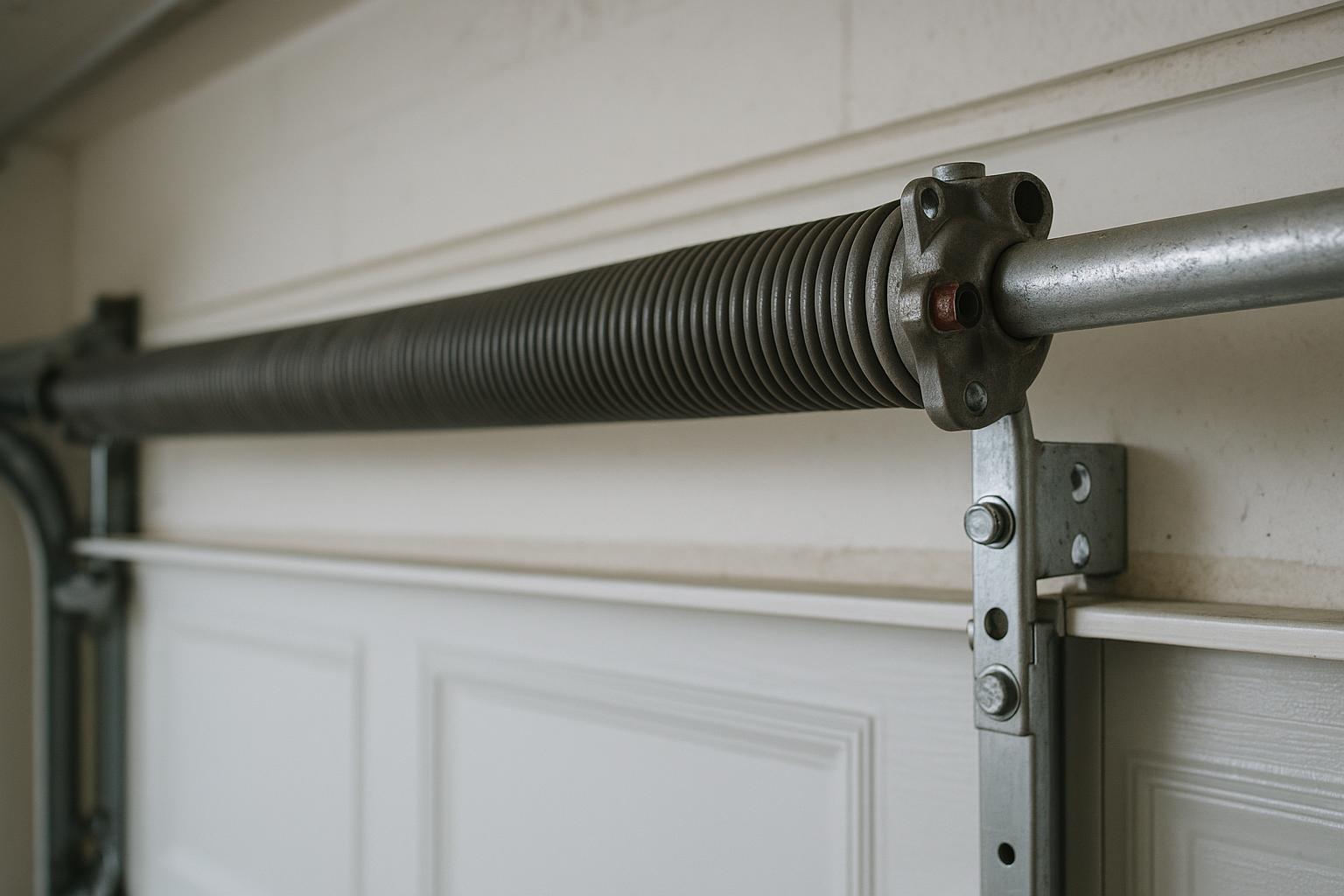
These are mounted horizontally above the garage door opening. They use torque to lift the door and are the more common type found in modern homes across Huntsville and Madison. Torsion springs tend to last longer, offer smoother operation, and are generally considered safer.
Extension Springs
These run along the horizontal tracks on either side of the door. They stretch and contract to provide lifting force. Extension springs are more common in older homes and lighter single-car doors. They're typically less expensive but have a shorter lifespan and can be more dangerous if they snap without safety cables in place.
Warning Signs Your Garage Door Springs Need Replacement
Springs rarely fail without giving some warning first. Here are the most common signs Huntsville homeowners should watch for:
1. The Door Feels Heavier Than Usual
Try disconnecting your opener and lifting the door manually. If it feels noticeably heavy or won't stay open on its own about three to four feet off the ground, your springs are likely losing tension.
2. Visible Wear or Rust
Take a look at your springs. Do you see rust, corrosion, or gaps in the coils? Rust weakens the metal and accelerates wear. In our humid Alabama climate, this is a particularly common issue.
3. The Door Opens Unevenly
If one side of your garage door rises faster than the other, it could mean one spring is weaker or has already broken. This puts extra strain on your opener and the remaining hardware.
4. A Loud Bang From the Garage
If you heard a loud bang — almost like a firecracker — coming from your garage when no one was in it, there's a good chance a spring snapped. A broken torsion spring will have a visible gap in the coil. Do not attempt to operate the door if this happens.
5. The Opener Struggles or Stops Working
When springs lose their ability to counterbalance the door's weight, your garage door opener has to work much harder. This can cause the motor to overheat, trip safety features, or burn out entirely — leading to a much more expensive repair.
Can You Replace Garage Door Springs Yourself?
We understand the DIY spirit — it's alive and well here in Huntsville. But garage door spring replacement is one job we strongly recommend leaving to professionals. Here's why:
- Extreme tension: Torsion springs are wound under tremendous force. A spring that releases unexpectedly can cause serious injury or even death.
- Specialized tools required: Proper replacement requires winding bars, vice grips, and precise measurements. Using the wrong tools or techniques is dangerous.
- Matching specifications: Springs must be matched to your door's exact weight and size. Installing the wrong spring leads to poor performance and premature failure.
Professional technicians have the training, tools, and experience to complete the job safely — usually in under an hour.
Proactive Replacement vs. Waiting for a Break
Many homeowners wait until a spring breaks before calling for service. While that's understandable, there are real advantages to proactive replacement:
- Avoid being stranded: A broken spring almost always means your car is stuck in the garage until a technician arrives. If it happens on a busy Monday morning in Meridianville or Harvest, that's a major disruption to your day.
- Prevent secondary damage: A snapping spring can damage the door panels, tracks, cables, or opener. Replacing worn springs before they break can save you from a much larger repair bill.
- Schedule on your terms: Instead of waiting for an emergency, you can book a convenient appointment and have the work done when it suits your schedule.
If your springs are approaching the seven-year mark and you use your door multiple times a day, it's worth having them inspected — even if everything seems fine on the surface.
What to Expect During a Spring Replacement
When you call a professional garage door company for spring replacement, here's a general overview of the process:
- The technician inspects the current springs, cables, and hardware.
- The door is secured and the tension is safely released from the old springs.
- New springs matched to your door's weight and dimensions are installed.
- The system is balanced, lubricated, and tested for smooth operation.
- The technician checks the opener, safety sensors, and overall alignment.
The entire process typically takes 45 minutes to an hour for a standard residential door.
Investing in Higher-Cycle Springs
If you're already replacing your springs, consider upgrading to high-cycle springs. While they cost a bit more upfront, springs rated for 20,000 or 25,000 cycles can last 15 to 20 years under normal use. For homeowners in Athens, Decatur, and across the Huntsville metro who plan to stay in their homes long-term, this upgrade often pays for itself by eliminating the need for a second replacement down the road.
Keep Your Garage Door Running Safely
Your garage door is likely the largest moving component in your home, and the springs are at the heart of its operation. Paying attention to the warning signs, scheduling regular maintenance, and replacing worn springs before they fail are the best ways to keep your system running smoothly and your family safe.
If you're in Huntsville or the surrounding communities and your garage door springs are showing their age, don't wait for a breakdown. Reach out to a trusted local professional to get an inspection and keep everything in working order.