
Your Garage Door Shouldn't Sound Like That
You press the button on your remote, and instead of a smooth, quiet operation, your garage door greets you with a symphony of grinding, squealing, or banging. If this sounds familiar, you're not alone. Noisy garage doors are one of the most common complaints we hear from homeowners across Huntsville, Madison, and the surrounding areas.
The good news? Most garage door noises point to identifiable — and fixable — problems. The bad news? Ignoring those sounds can lead to bigger, more expensive repairs down the road. In this guide, we'll walk you through the most common garage door noises, what causes them, and what you should do about each one.
Squealing or Screeching Sounds
A high-pitched squeal when your garage door opens or closes is one of the most cringe-worthy sounds a homeowner can experience. It's also one of the most common.
What Causes It
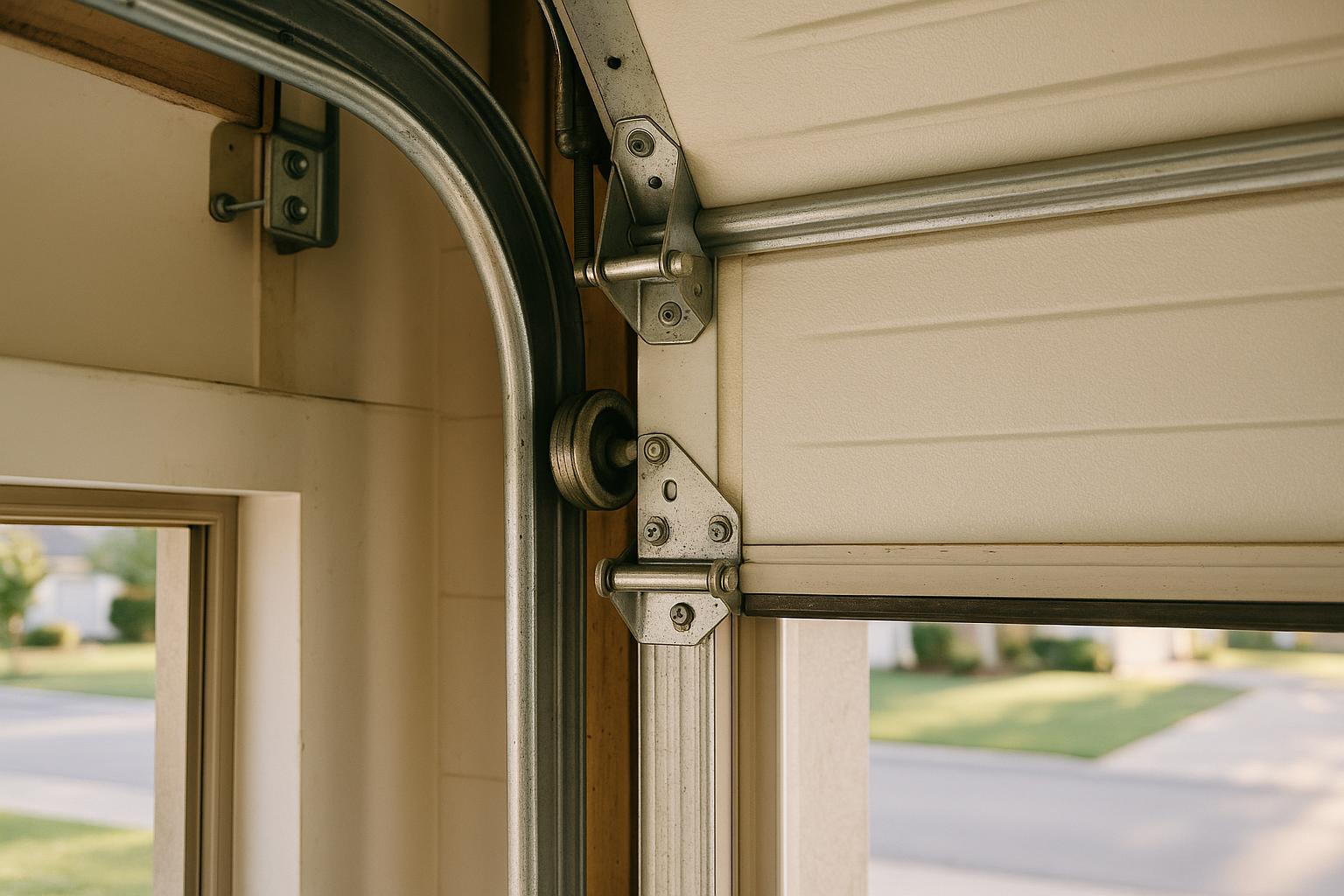
- Lack of lubrication: Metal rollers, hinges, and tracks need periodic lubrication to operate smoothly. Over time, especially in Huntsville's humid summers, lubricant breaks down and metal-on-metal contact creates that awful squealing noise.
- Worn rollers: Steel rollers without nylon coatings are notorious for squealing as they age. If your rollers are visibly worn or haven't been replaced in years, they're a likely culprit.
- Misaligned tracks: When the tracks that guide your door become slightly bent or misaligned, the rollers can drag against the sides, producing a scraping or screeching sound.
What to Do
Start by applying a silicone-based garage door lubricant to the rollers, hinges, and tracks. Avoid using WD-40, which is a solvent rather than a true lubricant and can actually attract dirt over time. If lubrication doesn't solve the problem, it may be time to have a technician inspect your rollers and track alignment.
Grinding or Scraping Noises
A grinding noise is harder to ignore and often signals a more serious issue than a simple squeal.
What Causes It
- Damaged or bent tracks: If something has impacted your track — a bump from a car, shifting of the door frame, or general wear — the door panels can grind against the damaged section every time the door moves.
- Worn gear in the opener: Many chain-drive and belt-drive garage door openers use a plastic drive gear internally. Over years of use, this gear wears down and begins to grind. You might notice the motor running but the door not moving, accompanied by a grinding sound.
- Stripped or broken rollers: Rollers that have cracked or lost their bearings will grind rather than roll smoothly along the track.
What to Do
Grinding noises usually require professional attention. Bent tracks need to be carefully realigned or replaced, and a worn opener gear should be replaced by a trained technician. Attempting to force a door with damaged components can make the problem significantly worse.
Rattling and Vibrating
Does your garage door rattle like a tin can every time it moves? This is especially common in older homes throughout Huntsville and Meridianville where garage doors may have been installed decades ago.
What Causes It
- Loose hardware: The nuts, bolts, and screws that hold your garage door system together naturally loosen over time due to the vibration of daily operation. Loose brackets, track mounts, and hinge bolts are common sources of rattling.
- A loose chain on the opener: If you have a chain-drive garage door opener, the chain can loosen and slap against the rail, creating a rattling or vibrating noise.
- Unsecured panels or weatherstripping: Loose panels or deteriorating weatherstripping can vibrate against the door frame during operation.
What to Do
Grab a socket wrench and carefully tighten all visible nuts and bolts on the door's hinges, brackets, and track mounts. Be careful not to overtighten, as this can strip the holes or warp the components. If you have a chain-drive opener, check the chain tension — it should have about a half-inch of play at the midpoint. If tightening everything doesn't help, a professional inspection can pinpoint the source.
Loud Banging or Popping
A sudden bang or pop from your garage door can be startling, and it's a noise you should never ignore.
What Causes It
- Torsion spring issues: The torsion springs above your garage door are under immense tension. As they wear, they can shift or slip on the torsion bar, causing a loud pop or bang. A spring that actually breaks will produce a sound like a gunshot — many Huntsville homeowners have told us they thought something fell in their attic.
- Panel shifting: If a panel is warped, damaged, or improperly secured, it can pop or bang as the door changes direction.
- Opener bracket issues: A loose or failing opener bracket can cause the entire opener to jolt during operation, producing a banging sound.
What to Do
Do not attempt to repair or adjust torsion springs yourself. These components are under extreme tension and can cause serious injury. If you hear a loud bang and your door won't open, call a professional immediately. For panel or bracket issues, a technician can assess whether a repair or replacement is the best course of action.
Humming or Buzzing Without Movement
If you press your garage door button and hear a hum or buzz but the door doesn't move, the problem is almost always in the opener.
What Causes It
- A burned-out motor capacitor: The capacitor gives the motor the initial boost it needs to start. When it fails, the motor hums but can't generate enough power to move the door.
- A stripped drive gear: As mentioned earlier, a worn internal gear will allow the motor to run without actually engaging the door mechanism.
- A locked or obstructed door: Sometimes the simplest explanation is the right one — the manual lock may be engaged, or something is physically blocking the door.
What to Do
First, check that the manual lock isn't engaged and that nothing is blocking the door's path. If those aren't the issue, the opener likely needs internal repair or replacement. This is a job best left to a professional who can diagnose the specific failed component.
When to Call a Professional
Some garage door noises can be resolved with basic maintenance — a little lubrication here, a tightened bolt there. But many noises are warning signs of components that are failing or have already failed. Here's a good rule of thumb:
- DIY-friendly: Lubricating moving parts, tightening loose hardware, checking for obvious obstructions.
- Call a professional: Anything involving springs, cables, track realignment, opener motor issues, or noises that persist after basic maintenance.
At Huntsville Garage Door Co, we help homeowners across Huntsville, Madison, Decatur, Athens, Harvest, and Meridianville diagnose and fix noisy garage doors every day. Whether it's a simple tune-up or a component that needs replacing, we show up on time and get it done right.
Don't Wait Until a Noise Becomes a Breakdown
Strange garage door noises rarely go away on their own. In most cases, they get worse — and so does the repair bill. If your garage door has been making sounds that concern you, schedule a maintenance inspection sooner rather than later. A small investment in diagnosis and repair today can save you from a costly emergency replacement tomorrow.
Have a noisy garage door? Contact Huntsville Garage Door Co today to schedule an inspection and get your door running smoothly and quietly again.