
A Frustrating Problem That's More Common Than You Think
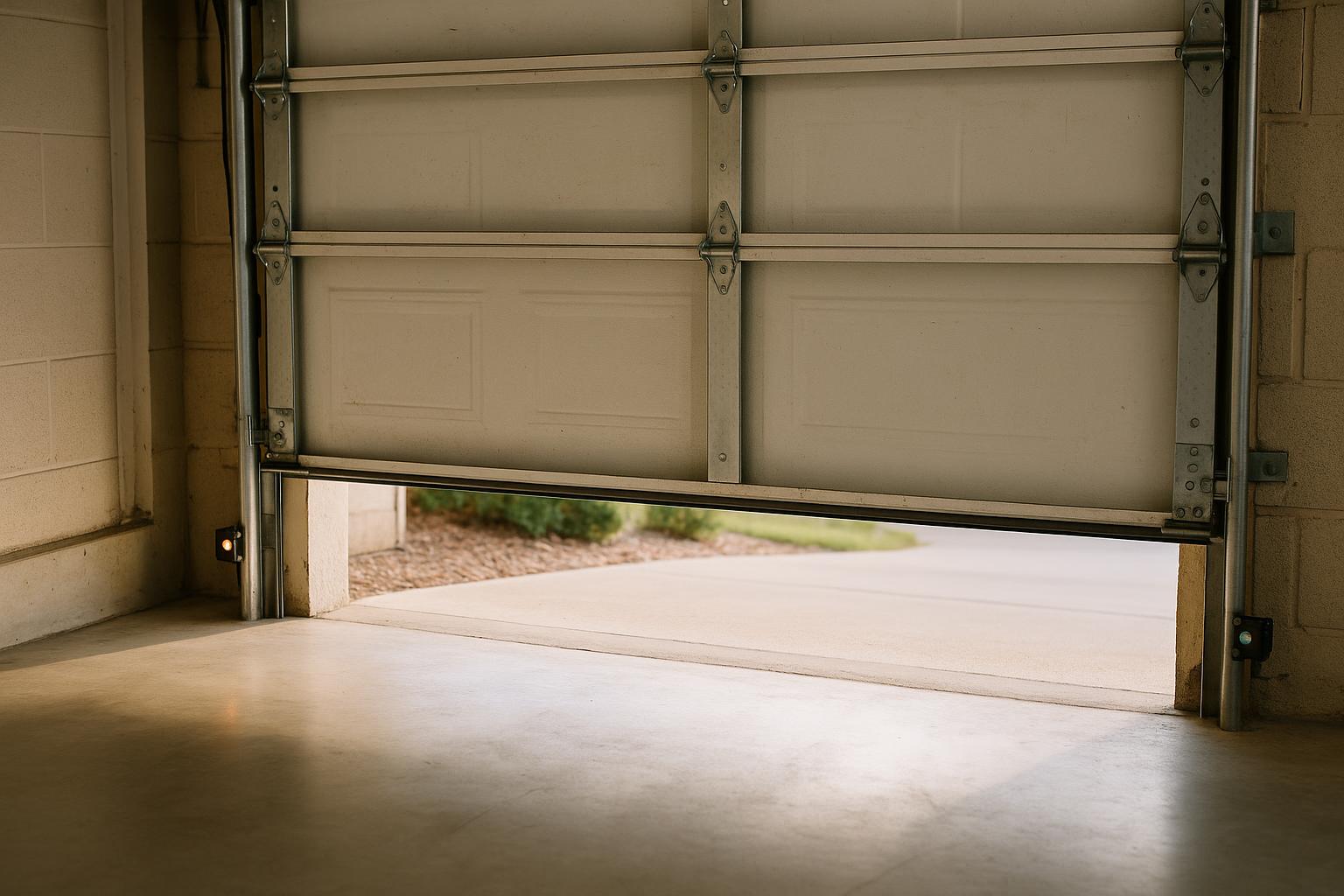
You press the button on your garage door remote, watch the door start its descent, and then — just before it reaches the floor — it stops and reverses right back up. If this scenario sounds familiar, you're not alone. This is one of the most common garage door complaints we hear from homeowners across Huntsville, and it can range from a simple fix to a sign of a more serious issue.
The good news is that a reversing garage door is actually a safety feature working as intended. Modern garage door openers are equipped with safety mechanisms designed to prevent the door from closing on a person, pet, or object. But when those systems misfire or other components wear out, the result is a door that refuses to stay closed — leaving your garage exposed to weather, pests, and security risks.
Let's walk through the most common reasons your garage door reverses before hitting the floor and what you can do about each one.
1. Misaligned Safety Sensors
This is the number one culprit behind a garage door that reverses unexpectedly. Federal law has required photoelectric safety sensors on all residential garage door openers since 1993. These small sensors are mounted near the bottom of your garage door tracks on either side, and they project an invisible beam across the opening. If anything breaks that beam while the door is closing, the opener automatically reverses the door.
Over time, these sensors can get bumped, shifted, or covered in dust and cobwebs — especially here in Alabama where humidity and insects are a year-round reality. When the sensors are misaligned or dirty, the opener thinks something is blocking the door even when the path is completely clear.
What You Can Do
- Check that both sensors are firmly mounted and pointing directly at each other.
- Clean the sensor lenses with a soft cloth to remove dust, dirt, or spider webs.
- Look at the indicator lights on each sensor. Most models show a steady green light when properly aligned. A blinking light usually indicates a problem.
- Make sure no objects like rakes, trash cans, or storage boxes are near the sensors.
2. Incorrect Close-Limit Settings
Your garage door opener has adjustable settings called travel limits that tell the motor exactly how far the door should move when opening and closing. If the close-limit setting is off, the opener may think the door has hit an obstruction when it's actually just reaching the floor. The opener interprets this resistance as a safety concern and reverses the door.
This issue frequently shows up after a new opener installation or when seasons change. Temperature swings in Huntsville — from hot, humid summers to chilly winters — can cause metal tracks and components to expand and contract slightly, which can throw off previously correct limit settings.
What You Can Do
Most openers have limit adjustment screws or digital controls. Consult your owner's manual to find the close-limit adjustment and make small changes, testing the door after each one. If you're unsure about making these adjustments yourself, it's best to have a technician handle it to avoid creating new problems.
3. Worn or Broken Garage Door Springs
Your garage door springs do the heavy lifting — literally. They counterbalance the weight of the door so the opener motor doesn't have to work as hard. When springs wear out, lose tension, or break, the door becomes significantly heavier. The opener motor strains against the extra weight, detects unusual resistance, and triggers a reversal.
Broken springs are one of the more dangerous garage door issues to deal with because they're under extreme tension. If you notice your door feels heavier than usual, moves unevenly, or you see a visible gap in one of the springs above the door, do not attempt to fix this yourself. Spring replacement should always be handled by a trained professional.
4. Damaged or Obstructed Tracks
The metal tracks that guide your garage door up and down need to be clean, properly aligned, and free of dents or bends. Even a small obstruction or a slight bend in the track can create enough resistance to trigger the opener's auto-reverse function.
What You Can Do
- Visually inspect both tracks for dents, bends, or debris.
- Wipe down the tracks with a damp cloth to remove buildup.
- Check that the tracks are securely fastened to the wall brackets.
If you notice significant damage to a track, don't try to bend it back into shape with tools. Improper track repair can make the problem worse and potentially cause the door to come off its tracks entirely.
5. Problems With the Garage Door Opener Itself
Sometimes the issue isn't mechanical at all — it's the opener's logic board or internal components. Electrical surges, age, and general wear can cause the circuit board inside the opener to malfunction, sending incorrect signals that cause the door to reverse. If you've ruled out sensors, limit settings, springs, and tracks, the opener itself may need repair or replacement.
Opener technology has improved dramatically in recent years. Many homeowners in the Madison and Huntsville area who upgrade their openers are surprised by how much quieter, faster, and more reliable modern units are compared to models from even ten years ago. Features like battery backup, smartphone connectivity, and soft-start/soft-stop operation are now standard on many models.
6. Frayed or Damaged Cables
Lift cables work alongside your springs to raise and lower the door smoothly. When a cable frays, loosens, or snaps, it can cause the door to move unevenly and trigger the opener's safety reversal. Like springs, cables are under significant tension and should only be repaired or replaced by a professional.
When to Call a Professional
Some of the fixes above — cleaning sensors, removing obstructions, checking for obvious issues — are perfectly safe for homeowners to tackle. But if the problem persists after basic troubleshooting, or if you suspect an issue with springs, cables, or the opener's internal components, it's time to bring in an expert.
Continuing to operate a malfunctioning garage door can lead to more expensive damage down the road. A door that repeatedly reverses puts extra strain on the opener motor, wears out gears faster, and can even damage the door panels themselves.
At Huntsville Garage Door Co, we diagnose and fix reversing garage doors every week for homeowners throughout Huntsville, Harvest, Meridianville, and the surrounding communities. We carry common replacement parts on our service trucks so most repairs can be completed in a single visit.
Keep Your Garage Door Running Smoothly
A garage door that won't close is more than an inconvenience — it's a security and safety concern. Whether the fix turns out to be a quick sensor adjustment or a full spring replacement, addressing the problem promptly saves you money and headaches in the long run.
If your garage door is reversing and you can't figure out why, don't keep hitting the button and hoping for the best. Give us a call or schedule a service appointment online. We'll get to the bottom of it and have your door working properly again — guaranteed.